

Five-reel video slots remain the most popular format in UK casinos because they balance visual variety with clear rules chicken-road-ice.eu. Players see five vertical reels, each usually three symbols high, and a fixed set of paylines or ways to win. The layout helps to track combinations while still allowing space for stacked wilds, multipliers and bonus rounds. Grasping how the reels stop, how lines pay, and what triggers features allows a player to assess whether a slot suits their risk preference and budget before any money is wagered.
The reason five reels evolved into the industry standard
Game creators moved from three-reel mechanics to five reels once screen technology could present more symbols without crowding. The extra reels raise the number of possible combinations, enabling bigger payouts and more intricate features. In the UK, five-reel games now represent the majority of new releases because they accommodate both simple line wins and complex ways-to-win engines. Players benefit from a familiar layout that still includes branded themes, animated sequences and layered bonus games.
Five reels also match modern mathematics. With twenty symbols per reel, the total number of outcomes amounts to several million, giving designers opportunity to set return-to-player percentages between 94 % and 98 %. Volatility can be tuned by altering how often high-value symbols land or how bonus rounds are weighted. This flexibility explains the format shows up across penny slots, high-limit titles and progressive jackpots alike.
Paylines versus pay methods: which really pays
Winning lines are preset patterns that cross the reels. A three-symbol match must hit precisely on one of those lines to pay. Ways-to-win engines disregard fixed lines and instead pay for identical symbols on consecutive reels from the leftmost reel. In a 243-ways game, any symbol showing on reel one, reel two and reel three generates a win no matter vertical position.
Both approaches can produce the same RTP figures, yet they play differently in practice. Winning lines favour careful line selection and often include diagonal and zigzag patterns. Winning ways disperses smaller payouts across additional combos, smoothing variance. UK players who favour frequent small wins usually move toward 243- or 1024-ways titles, while those chasing larger line hits remain with classic payline games.
Columns and lines that control every spin
Most five-reel slots utilize a 5 × 3 grid, although some increase to four or five rows during base play or features. Each reel halts independently, and the symbols that land create the outcome. The grid size sets the maximum number of paylines or ways: a 5 × 3 layout with fixed lines usually delivers between ten and fifty lines, while a ways-to-win engine on the same grid evaluates adjacent symbols from left to right, reaching 243 ways.
Designers sometimes introduce a sixth reel that only emerges in bonus rounds, effectively transforming the game into a 5 × 4 layout for a limited number of spins. Players should note whether the extra reel stays active after the feature ends, because that change directly influences the frequency of line hits. Checking the paytable before spinning reveals the exact reel height and any dynamic row additions.
Stake range, unit value and setting a comfortable stake
Five-reel slots take stakes from one penny per line up to multiple pounds per spin. The total bet equals the amount of lines or ways multiplied with the coin value. A 20-line game with a 10p coin value therefore costs £2 per spin. Progressive jackpot games usually demand the maximum bet to be eligible for the top prize, so gamblers should confirm the minimum required bet in the guidelines.
UK-based casinos show the bet range in GBP. Modifying the unit value or the amount of active lines changes both the cost and the potential win. Defining a loss threshold before starting keeps the bet from rising slowly during a play session. The majority of sites enable players to set a favourite stake amount, helping to stay within a planned budget.
Wilds and how they replace for wins
Wild symbols stand in for any normal paying icon, increasing the chance of hitting a line. Some wilds carry multipliers that double or triple the win when they act as substitutes. Stacked wilds fill an whole reel, creating multiple winning combinations on a single spin. Wilds that expand stretch to cover a reel after the reels halt, then stay put while the rest of the reels re-spin.
Users ought to see whether wilds show up on the entire set of reels or only on certain positions. A game that positions wilds on reels two, three and four exclusively will produce less substitute wins than a game that allows wilds on all reels. The pay table shows all limitations and shows the multiplier figure attached to each wild type.
Scatter symbols, complimentary spins and bonus game layout
Scatter symbols trigger bonus features when a required number land anywhere on the reels, irrespective of paylines. Three scatters commonly give ten free spins, while four or five scatters increase the spin count or provide an instant cash prize. During free spins, some slots increase the RTP by adding extra wilds or multipliers that do not appear in the base game.
Bonus rounds may also come as pick-and-click games, wheel spins or trail features. Each mechanic has its own odds and payout ceiling. Reviewing the rules before playing clarifies how many scatters are needed, whether retriggers are possible, and whether the bonus can be bought directly with a feature-buy button where permitted by law.
Return to Player and risk level: the metrics that shape every round
RTP is the theoretical percentage of total stakes that a slot pays back as winnings. A 96 % RTP indicates that, over hundreds of thousands of spins, £96 is paid out for every £100 bet. Single sessions vary widely from this mean. Variance measures how irregularly those winnings are spread: low-volatility slots pay small amounts often, high-volatility slots pay larger sums less frequently.
UK casinos must display RTP values in the game information. Users can assess two five-reel games by checking both RTP and the listed volatility band. A 94.5 % RTP slot with medium volatility might suit a two-hour gaming period on a limited bankroll, while a 96.5 % RTP high-volatility slot may need a heftier balance to endure longer winless streaks before a bonus round appears.
Multipliers, accumulated symbols and the path to the maximum win
Multipliers appear either as separate symbols or as element of wild and scatter mechanics. A 5× multiplier used to a £10 line win produces a £50 payout. When multipliers accumulate, for example a 2× wild and a 3× scatter bonus, the game compounds the factors together rather than summing them. The highest win figure shown in the paytable already accounts for the greatest possible multiplier combination.
Consecutive symbols occupy consecutive positions on a reel, increasing the probability of multiple paylines scoring at once. In a 5 × 3 layout, three stacked symbols on one reel can contribute to dozens of line wins simultaneously. Players chasing the advertised max win should consider whether the figure is projected or limited, and whether the jackpot contribution is factored in the RTP calculation.
How to experience Chicken Road Ice Game and what awaits
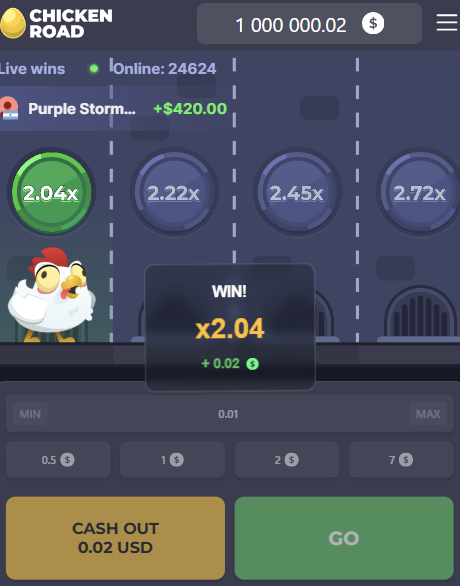
Chicken Road Ice Game uses the typical five-reel format with a winter farm theme. The grid measures 5 × 3 and uses 20 fixed paylines. The return-to-player stands at 96.1 % with medium volatility, putting it between frequent small wins and occasional larger payouts. The minimum total stake sits at £0.20, and the maximum reaches £100 per spin, serving both casual and high-limit UK players.
Wild symbols land on reels two, three and four and stand in for all regular symbols except the scatter. The scatter, shown as a snowflake, starts ten free spins when three or more appear. During the feature, a multiplier trail increases from 1× to 5× with each consecutive win, resetting only when a spin delivers no win. The maximum theoretical payout is 5,000× the total stake, achieved when five wilds land on every payline during the highest multiplier step.

To start, choose a bet amount using the plus and minus buttons, then press spin. Autoplay lets you between ten and one hundred spins with optional loss and single-win limits. The paytable, reached through the menu icon, lists line patterns, symbol values and the full rules for the free-spin trail. UK players can confirm the current RTP and volatility band in the same information panel before betting funds.